Choosing among the top China Machining Services requires more than comparing hourly prices. A reliable decision begins with capability, material knowledge, inspection discipline, and documented production experience. CNC milling suits housings, brackets, and complex five-axis surfaces. CNC turning handles shafts, bushings, and threaded components. Swiss machining can produce small medical or electronic parts with impressive repeatability. Wire EDM remains valuable for hardened steel, narrow slots, and intricate profiles.
Details matter.
Tony Schmitz, a respected machining researcher and educator, often emphasizes this practical principle: “Good machining begins with understanding the process, not merely running the machine.” The quotation captures an essential truth. A capable supplier studies the drawing before cutting metal. Engineers should confirm tolerances, surface finishes, datum references, and material certificates. They should also review probe calibration, tool-life control, first-article inspection, and final measurement reports.
China’s strongest machining suppliers may combine modern CNC equipment with experienced operators. Some support rapid prototypes. Others specialize in stable, high-volume production. The best choice depends on the part, not the country alone. Ask for sample inspection records. Request clear production timelines. Check whether the factory understands ISO 9001 procedures and industry-specific requirements.
No ranking is perfect.
A supplier with advanced machines may still communicate poorly. A smaller workshop may deliver better attention to difficult prototypes. This makes comparison imperfect, and that limitation deserves recognition. The following guide examines China Machining Services through practical criteria, including accuracy, material range, quality assurance, pricing transparency, communication, and scalability. Its goal is not to promise a universal winner, but to help buyers make a defensible engineering decision.
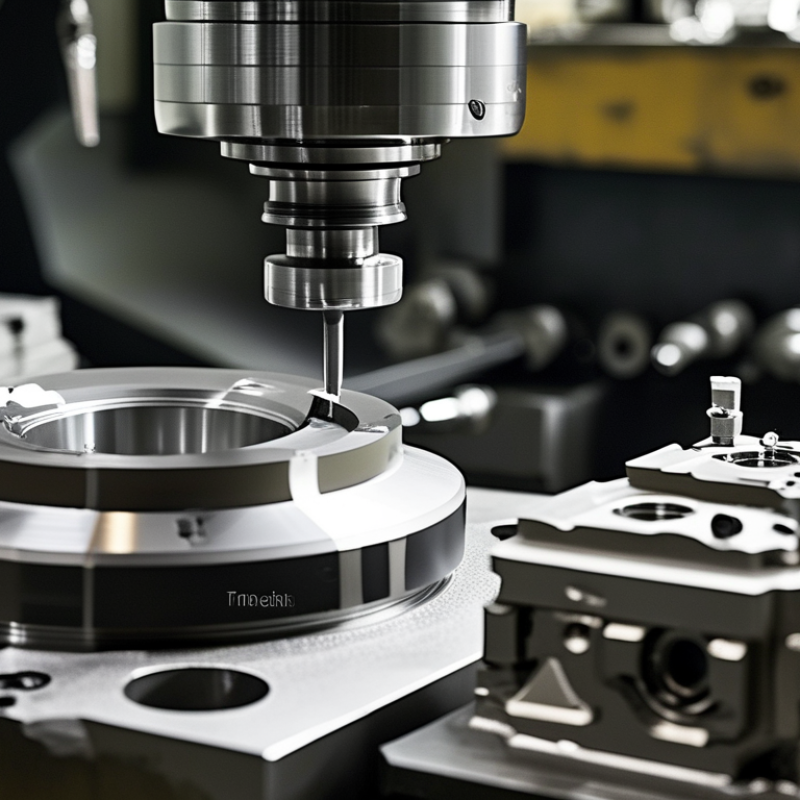
China machining services cover subtractive manufacturing for prototypes, replacement parts, and production batches. Common processes include CNC milling, CNC turning, five-axis machining, grinding, wire EDM, and sheet-metal fabrication. Many suppliers also provide anodizing, plating, heat treatment, dimensional inspection, and assembly.
Their scope reaches aerospace, medical equipment, automotive systems, robotics, electronics, and energy infrastructure. The 2024 UNIDO International Yearbook of Industrial Statistics places manufacturing at approximately 17% of global GDP. This scale supports broad material access, skilled labor, and flexible production capacity.
The World Robotics 2024 report recorded 541,302 industrial robot installations worldwide in 2023. That figure reflects growing demand for automated, repeatable manufacturing. However, automation does not replace process discipline. A polished sample can hide weak batch control.
Tips: Request material certificates, tolerance records, inspection methods, and sample measurement data. Confirm whether testing uses calibrated equipment. Ask for a first-article inspection before full production. This small step prevents expensive surprises.
Industrial applications demand different priorities. Aerospace parts may require tight tolerances, traceability, and difficult alloys. Medical components need clean handling and consistent surface quality.
Automotive parts often require repeatability across thousands of units. Electronics projects may prioritize thin walls, heat control, and fast revisions.
A 2024 manufacturing technology survey found that many manufacturers rank digital production visibility as a major competitiveness factor. Yet the data is not perfect. Smaller workshops may record production manually, creating gaps in traceability. Supplier selection should therefore examine real inspection evidence, not only advertised capability.
China’s machining services cover several practical production routes. CNC milling removes material with rotating cutters, making it suitable for housings, brackets, and complex pockets. CNC turning rotates the workpiece and produces shafts, bushings, and threaded parts. Shops also provide five-axis machining for curved aerospace-style components, although it usually costs more and needs stronger programming control.
Grinding delivers tighter tolerances and smoother surfaces after milling or turning. Electrical discharge machining, including wire and sinker EDM, handles hardened steel and narrow slots that cutting tools may damage. Sheet-metal cutting, bending, and laser processing support enclosures and lightweight assemblies. According to Grand View Research, the global CNC machine market was valued at more than 80 billion dollars in 2023, showing strong demand for automated production. China’s scale remains significant. UNIDO’s World Manufacturing Production statistics place China at roughly one-third of global manufacturing output.
The process choice should follow the drawing, material, quantity, and tolerance—not habit. A 3-axis mill may outperform a five-axis machine on a simple aluminum plate. That sounds obvious, yet quoting often ignores it. Grinding can improve a steel shaft’s finish, but it adds setup time and inspection costs. In practice, reliable suppliers verify datums, tool access, surface requirements, and first-article dimensions before full production. Market reports use different methods, so their forecasts are not guarantees. Actual results still depend on operator skill, machine condition, measurement systems, and honest communication.
| Machining Service | Typical Equipment | Common Materials | Typical Applications | Typical Tolerance Range* | Key Advantages |
|---|---|---|---|---|---|
| CNC Milling | 3-axis, 4-axis, and 5-axis CNC milling centers | Aluminum, steel, stainless steel, brass, copper, titanium, engineering plastics | Housings, brackets, molds, fixtures, manifolds, prototypes | About ±0.01–±0.05 mm, depending on material, geometry, and inspection requirements | Produces complex prismatic features, pockets, slots, and contoured surfaces |
| CNC Turning | CNC lathes, turning centers, and mill-turn machines | Carbon steel, stainless steel, aluminum, brass, bronze, titanium, plastics | Shafts, pins, bushings, threaded parts, fittings, rollers | About ±0.01–±0.05 mm for many standard turned features | Efficient for round, cylindrical, tapered, and threaded components |
| CNC Swiss Turning | Swiss-type CNC automatic lathes | Stainless steel, titanium, brass, aluminum, nickel alloys, medical-grade plastics | Small shafts, miniature connectors, medical components, precision fasteners | Often approximately ±0.005–±0.02 mm for selected features | Excellent support for small diameters, long slender parts, and high-volume production |
| CNC Grinding | Surface, cylindrical, centerless, and jig grinding machines | Hardened steel, tool steel, stainless steel, ceramics, carbide | Precision shafts, bearing seats, dies, molds, gauge components | Can reach approximately ±0.002–±0.01 mm on suitable features | Improves dimensional accuracy, flatness, roundness, and surface finish |
| Electrical Discharge Machining (EDM) | Wire EDM and sinker EDM machines | Conductive tool steel, hardened steel, carbide, copper, graphite | Fine slots, narrow profiles, mold inserts, punches, complex internal features | Approximately ±0.005–±0.02 mm, depending on process and part geometry | Machines hard conductive materials and intricate shapes without conventional cutting forces |
| Laser Cutting | Fiber and CO₂ laser cutting systems | Carbon steel, stainless steel, aluminum, brass, copper, sheet metals | Flat brackets, panels, enclosures, signs, sheet-metal prototypes | Commonly about ±0.1–±0.3 mm, influenced by sheet thickness and design | Fast, contactless cutting of 2D profiles with limited tooling requirements |
| Sheet Metal Fabrication | Press brakes, punching machines, laser cutters, and forming equipment | Mild steel, stainless steel, aluminum, galvanized steel | Cabinets, chassis, covers, brackets, electrical boxes, structural panels | Typically about ±0.1–±0.5 mm, depending on material and forming operation | Suitable for lightweight enclosures and cost-effective low- to high-volume production |
| Metal Casting | Sand casting, investment casting, and die-casting equipment | Aluminum alloys, zinc alloys, iron, steel, bronze, and other cast alloys | Pump bodies, valve components, automotive parts, machinery housings | Often approximately ±0.1–±1.0 mm before secondary machining | Creates complex near-net-shape parts and reduces material waste for suitable designs |
| Plastic CNC Machining | CNC milling and turning centers with plastic-specific tooling | ABS, POM, nylon, PTFE, PEEK, polycarbonate, acrylic | Insulators, gears, guides, covers, prototypes, laboratory components | Approximately ±0.05–±0.15 mm for many parts, subject to thermal expansion | Rapid production of functional plastic parts without injection molds |
| Rapid Prototyping | CNC machining, 3D printing, vacuum casting, and finishing equipment | Engineering plastics, resins, aluminum, stainless steel, silicone | Functional prototypes, fit checks, design validation, pilot parts | Commonly about ±0.1–±0.3 mm, with tighter values available through CNC processes | Shortens development cycles and enables testing before mass production |
*Tolerance ranges are general industry references rather than guaranteed specifications. Actual results depend on part size, material, machine capability, drawing requirements, thermal control, surface treatment, and inspection method.
What Are the Top China Machining Services?
How China Machining Services Are Planned and Delivered
China machining services commonly include CNC milling, CNC turning, sheet metal fabrication, grinding, and surface finishing. Planning starts with a review of the 3D model, technical drawings, material, and required quantity. Engineers check wall thickness, tolerances, threads, and tool access before quoting. A small design change can reduce machining time significantly. It can also prevent avoidable rework.
Material selection must match the component’s working conditions. Aluminum suits lightweight parts, while stainless steel supports corrosion resistance and strength. The supplier should confirm material certificates and clarify unclear specifications before production. Experienced teams normally create process routes, select cutting tools, and define inspection points. The plan should remain practical, not merely impressive on paper.
Delivery usually begins with a prototype or first article inspection. Inspectors may use calipers, micrometers, gauges, and coordinate measuring equipment. Critical dimensions need recorded results, not informal assurances. Surface treatment, labeling, and protective packaging also require written confirmation. Some schedules look reliable but ignore approval delays, machine maintenance, or material shortages. That is where planning becomes less certain. A realistic supplier shares progress updates, photographs, inspection reports, and revised dates when conditions change. Perfection is unlikely. Careful correction matters more.
Quality begins with measurable controls, not attractive factory photos. The ISO Survey 2023 recorded 1,265,216 ISO 9001 certificates worldwide in 2023. This shows the standard’s global reach, but certification alone cannot prove machining consistency.
Buyers should request calibration records, material certificates, first-article inspection reports, and process capability data. A reliable supplier can trace one aluminum batch from incoming inspection to the final dimensional report. Coordinate measuring machines should verify critical features, while surface roughness checks should match drawing requirements.
Traceability matters. Small gaps remain.
Material selection shapes cost, strength, and service life. The U.S. Geological Survey reported approximately 70 million tonnes of global primary aluminum production in 2023.
Aluminum alloys support lightweight housings and heat-sensitive components. Stainless steel suits corrosive environments, although it can increase cutting time and tool wear. Carbon steel offers strength at a lower material cost. Engineering plastics help reduce weight and electrical conductivity.
The World Steel Association reported 1.892 billion tonnes of crude steel production in 2023, underlining steel’s continuing industrial importance.
Production capability should match the part, volume, and tolerance. China machining services may combine CNC milling, turning, grinding, wire cutting, and secondary finishing.
High-volume work needs stable fixtures and documented tool-life control. Prototype work needs responsive engineering feedback. Ask for sample dimensions, rejected-part rates, and realistic lead times.
In practice, quoted tolerances are sometimes more optimistic than the process allows. A careful supplier will admit this early, propose a revision, or request tighter inspection planning.
That honesty is more valuable than a perfect-looking quotation.
Choosing a China machining service provider starts with process fit, not the lowest quotation. CNC milling suits prismatic parts, while turning handles shafts and threaded components. Complex prototypes may need five-axis work, inspection planning, and careful fixture design. Ask whether the shop has recent experience with your material, tolerance range, and production volume. A capable supplier should explain limitations clearly. That honesty matters.
Review the technical reply, not just the price sheet. It should confirm drawing revision, tolerances, surface finish, material certificates, packaging, and delivery terms. Request a sample or first-article report with measured dimensions. Check whether inspection uses calibrated tools, such as micrometers, gauges, and coordinate measuring equipment. Traceability should connect raw material to finished parts. During a remote audit, look for organized work orders, clean machines, and corrective-action records. Photos help. They are not proof.
Communication often reveals operational quality. Send one difficult feature and ask how it will be machined, inspected, and protected during shipping. A useful answer includes risks, not vague confidence. I have seen promising quotes fail because a small chamfer was missing from the final revision. The mistake was avoidable, yet it exposed weak document control. Build approval checkpoints into the order and define who accepts deviations. Compare lead time against realistic capacity, not optimistic promises. No supplier gets every estimate right. Leave room for pilot batches and honest review when results are imperfect.
: They include CNC milling, CNC turning, five-axis machining, grinding, wire EDM, and sheet-metal fabrication. Additional services may include plating, heat treatment, inspection, and assembly.
CNC milling suits housings, brackets, aluminum plates, and components with pockets. Rotating cutters remove material from fixed workpieces. Simple parts may not need five-axis machining.
CNC turning works well for shafts, bushings, threaded parts, and other rotational components. The workpiece spins. Cutting tools shape its outer and inner surfaces.
Five-axis machining supports curved parts and difficult angles, including complex aerospace-style components. It usually costs more. Programming quality matters greatly.
Grinding can improve surface smoothness and dimensional accuracy on steel shafts and similar parts. However, it adds setup and inspection costs. More precision is not always more economical.
Wire and sinker EDM can process hardened steel, narrow slots, and shapes cutting tools may damage. It is useful for difficult geometries. The process still requires careful programming and inspection.
Applications include aerospace, medical equipment, automotive systems, robotics, electronics, and energy infrastructure. Each sector has different priorities. Aerospace may need traceability, while electronics may need thin walls and fast revisions.
Request material certificates, tolerance records, inspection methods, and sample measurement data. Confirm that measuring equipment is calibrated. Ask for a first-article inspection before full production.
No. Automation supports repeatability, but process discipline remains essential. A polished sample can hide weak batch control. Manual records may also create traceability gaps.
China Machining Services cover a broad range of precision manufacturing solutions, including CNC milling, CNC turning, grinding, drilling, cutting, and customized surface finishing. These services support industries such as automotive, aerospace, electronics, medical equipment, industrial machinery, and consumer products. By combining advanced equipment, skilled technicians, digital production planning, and flexible batch capabilities, Chinese machining providers can handle prototypes, small orders, and large-scale production according to different design and performance requirements.
A reliable China Machining Services provider should offer clear drawing reviews, material selection support, process planning, production scheduling, in-process inspection, and final quality control. Common materials include aluminum, stainless steel, carbon steel, copper, titanium, plastics, and other engineering materials. When evaluating a supplier, buyers should consider machining accuracy, equipment capacity, quality systems, material traceability, communication efficiency, delivery reliability, pricing transparency, and after-sales support. A thorough assessment helps ensure that the selected provider can consistently deliver safe, compliant, and high-quality components.

SX Machining